 how-to
Navigating FDA Animal Food Regulations: A 2026 Guide
Last Updated: October 23, 2026
Quick Summary
Navigating FDA animal food regulations means following the FDA's own rulebook for livestock feed and pet food, not the human food rulebook. The core statute is the Federal Food, Drug, and Cosmetic Act, animal food additive regulations sit in 21 CFR 570, and FSMA preventive controls for animal food sit in 21 CFR 507.
- The FDA sets federal rules for animal food safety, labeling, and ingredient identity and uses, while state feed control officials handle registration and label review in most states. States can also impose their own allowances or restrictions within their State.
- Facilities that manufacture, process, pack, or hold animal food generally need a written food safety plan built on hazard analysis and risk-based preventive controls.
- Every livestock feed ingredient needs a recognized regulatory status, and checking 21 CFR 570, GRAS & AFIC Inventories, and AAFCO Ingredient Definitions first is the recommended starting step.
- Facilities that manufacture, process, pack, or hold animal food for U.S. consumption must register with the FDA, and registration is biennial.
- There is no dietary supplement category for animals, so a supplement for a horse or dog is still animal food and follows animal food rules.
Table of Contents
- Navigating FDA Animal Food Regulations: Who Oversees What
- FSMA Preventive Controls for Animal Food: What Your Facility Must Have
- How to Determine Livestock Feed Ingredient Regulatory Status
- Animal Food Facility Registration: Who Must Register and How
- FDA Animal Food Import Requirements for Foreign Suppliers
- Labeling and Claims Review for Animal Food Products
- Records, Inspections, and Enforcement Readiness
- Conclusion
- Frequently Asked Questions
Navigating FDA Animal Food Regulations: Who Oversees What
Navigating FDA animal food regulations starts with one fact most guides bury: the FDA regulates animal food under its own rulebook, and that rulebook is not the same as the human food rulebook. At Seven Hills Regulatory Services, LLC, we work through this framework regularly with the feed industry and pet food makers. The core statute is the Federal Food, Drug, and Cosmetic Act, and the framework was reshaped by the FDA's Food Safety Modernization Act pages.
So who oversees what? The FDA sets the federal rules for animal food safety, labeling, and ingredient identity and their conditions of safe use. State feed control officials handle registration and label review in their respective State. AAFCO publishes a model bill and model regulations that States can adopt to promote uniformity among States.
Animal Food Categories and Their Regulatory Paths
Animal food splits into three practical groups, and each follows a different path:
- Livestock and poultry feed. Ingredients need defined status (more on this below).
- Pet food. Treated as animal food, with its own labeling conventions.
- Animal nutritional supplements. These are animal food products, not dietary supplements. There is no dietary supplement category for animals.
That last point trips up founders constantly. A "supplement" for a horse or dog must meet animal food standards and follows animal food rules, else it could be classified as a new animal drug requiring drug approval.
FSMA Preventive Controls for Animal Food: What Your Facility Must Have
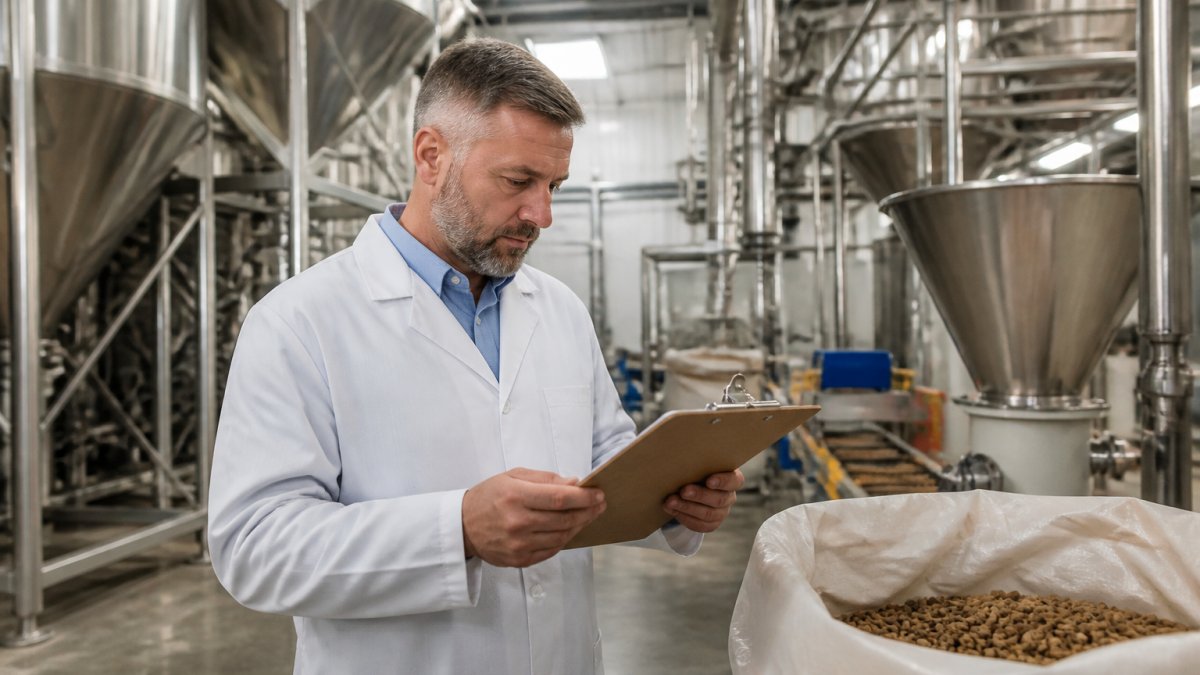
Facilities that manufacture, process, pack, or hold animal food generally need a written food safety plan built on hazard analysis and risk-based preventive controls. The FDA's Preventive Controls for Animal Food Rule page lays out the requirement.
Hazard Analysis and Risk-Based Preventive Controls
Start with a hazard analysis. Identify biological, chemical, and physical hazards reasonably likely to occur. Then set preventive controls for each one.
Your plan needs monitoring, corrective actions, verification, and records. A common mistake is writing the plan once and shelving it. In practice, inspectors ask to see records that prove the controls are in place.
Current Good Manufacturing Practice (cGMP) Requirements
cGMP covers the basics: sanitation, pest control, equipment maintenance, and personnel practices. These are baseline hygiene requirements, not optional polish. Poor sanitation is one of the fastest routes to an adulteration finding.
How to Determine Livestock Feed Ingredient Regulatory Status
Ingredient status is where we see the most delays, and it is the question that determines almost everything downstream, your label, your claims, your facility obligations, and whether a state will register the product at all. Every livestock feed ingredient needs a recognized regulatory status before you market it.
The Four Status Paths and When Each Applies
- A published food additive regulation (FAP). The ingredient is already listed in the animal food additive regulations under 21 CFR 570. This is the cleanest path: if your ingredient and its intended use match the regulation's conditions (species, maximum inclusion level, and any required labeling), you can rely on it without a new submission. Read the regulation's conditions closely, using a listed ingredient above its stated level or in an unlisted species takes you off this path.
- A GRAS determination. The ingredient is generally recognized as safe by qualified experts under the conditions of its intended use. GRAS is not a loophole; it requires a documented safety basis and, in practice, a well-organized dossier. The FDA's GRAS notification program is voluntary, but a self-affirmed GRAS position without solid documentation is difficult to defend during an inspection or a state label review. Not all States accept self-determinations of GRAS without an FDA Notification, and FDA is seeking to make Notification mandatory.
- An Animal Food Ingredient Consultation (AFIC). This is a pathway that was created to replace the AAFCO Ingredient Definition pathway when the MOU between FDA and AAFCO ended. It will not result in an official agency action as it is still an enforcement discretion.
- An AAFCO Ingredient Definition. AAFCO publishes model definitions for feed ingredients, and States adopt them by reference. The Ingredient Definition pathway ended with the FDA MOU, but AAFCO stood up a new program, the Scientific Review of Ingredient Submission (SIRS), which is based upon a GRAS determination.
- An FDA-accepted submission for a new ingredient/additive. For a genuinely new ingredient with no listing, no GRAS basis, and no AAFCO definition or SRIS review, you need a pre-market safety package and either FDA review or SRIS review.
A Decision Sequence That Saves Rework
Most practitioners work through the paths in a fixed order rather than picking one upfront:
- Step 1: Check 21 CFR 570 first. Search the animal food additive regulations for your ingredient and confirm the species and use level match. If it matches, document the citation and move on.
- Step 2: Check GRAS and AFIC Inventories. Ingredients reviewed through GRAS Notification or Ingredient Consultation will be posted online with use, target species, inclusion rates.
- Step 3: Check AAFCO OP. If there is no additive regulation or inventory listing, look for an AAFCO definition.
- Step 4: Evaluate GRAS. If neither of the above applies, assess whether a GRAS position is defensible for your intended use, and build the safety documentation.
We help clients plan Pre-filing Consultation and regulatory strategy so the submission holds up the first time.
Animal Food Facility Registration: Who Must Register and How
Facilities that manufacture, process, pack, or hold animal food for consumption in the U.S. must register with the FDA. Registration is biennial and must be renewed on schedule.
Foreign facilities that ship animal food to the U.S. generally must register too, and they need a U.S. agent. FDA's facility registration guidance explains the process. Keep the registration current; a lapsed registration can hold up imports.
Schedule a Free 30-minute Consultation →
FDA Animal Food Import Requirements for Foreign Suppliers
Imported animal food faces extra gates. Foreign suppliers must meet the same safety standards as domestic ones, and importers carry new duties under FSMA. The Foreign Supplier Verification Program requires importers to verify that suppliers meet U.S. requirements.
Key steps for importers:
- Confirm the foreign facility is registered.
- Verify the supplier's food safety controls.
- Keep records of your verification activities.
The FDA's import requirements for animal food page covers the specifics. Get this wrong and shipments can be refused at the border.
Labeling and Claims Review for Animal Food Products
Labels and claims are a top source of enforcement action, and they are also where product classification gets decided in practice. A claim on a label can change how regulators read the product, so the label review and the ingredient-status review should happen together, not in sequence. Animal food labels must be truthful and not misleading, product claims need support, and nutritional claims must match the product's actual composition.
A Step-by-Step Label and Claims Review
Most practitioners run a label review in a fixed sequence so nothing gets missed:
- Confirm product classification first. Is this livestock feed, pet food, or an animal nutritional supplement? There is no dietary supplement category for animals, so a product marketed as a supplement for a horse or dog is still animal food and follows animal food labeling rules. You want to avoid being classified as a drug.
- Verify every ingredient named on the label has a recognized status. Cross-check each ingredient against 21 CFR 570, an adopted AAFCO definition, or a documented GRAS position. An unapproved ingredient in the product is a routes to a State label rejection.
- Check the guaranteed analysis against lab data. Nutrient values on the label must match actual composition within applicable tolerances. A guaranteed analysis that does not match lab results is a substantiation failure, not a formatting issue.
- Review each claim for support. Separate nutrient content claims from health or structure-function style claims, and confirm you hold evidence for each one. Structure-function and health claims are typically viewed as drug claims by FDA and States. Vague or implied claims are the hardest to defend because regulators read them the way an ordinary purchaser would and may result in rejections by regulators.
- Check required label elements. Product name, guaranteed analysis, net quantity statement, and any required feeding directions or cautions must all be present and correctly formatted. Follow labeling requirements codified in 21 CFR 501 as well as those published in the AAFCO OP.
- Re-review after any formulation change. A reformulation can invalidate a claim or push an ingredient above its listed use level, so the label review is not a one-time event.
Claims That Commonly Trigger Problems
Label Element | What to Check | Common Problem |
|---|---|---|
Product name | Matches ingredient regulatory status | Unapproved ingredient named |
Guaranteed analysis | Accurate nutrient levels | Values don't match lab data |
Claims | Supported by evidence and relevant for a food | Drug Claim not suitable for a Food |
Net quantity | Correct statement | Formatting errors |
Supplement-style claims | Product still classified as animal food | Implied drug positioning |
That last row is worth dwelling on. Positioning an animal product as a dietary supplement, even implicitly, through structure-function language borrowed from the human supplement world, creates a classification mismatch that can surface in a State label review or an FDA inspection. This often results in a drug classification and therefore marketing of an unapproved drug.
We recommend a label and claims review before any launch. Our team handles Labeling and Claims Review for both livestock feed and pet food. Small wording choices can change how regulators read a claim.
Records, Inspections, and Enforcement Readiness
Records are your defense. Keep food safety plans, monitoring logs, corrective actions, and supplier verification on file and easy to retrieve. Inspectors expect to see them quickly.
Prepare for inspections before they happen:
- Assign a records owner at each facility
- Run a mock records audit each quarter
- Train staff on what inspectors ask for
Conclusion
Animal food compliance is a moving target, and the details decide whether your product reaches market on time. Seven Hills Regulatory Services, LLC brings animal scientists, toxicologists, and former FDA scientists to the table for pre-market reviews, labeling, and FSMA support. Schedule a free 30-minute consultation to map your path to acceptance and approval.
Frequently Asked Questions
What FDA regulations apply to animal food manufacturers?
Animal food manufacturers must comply with the Federal Food, Drug, and Cosmetic Act, including the FSMA Preventive Controls for Animal Food rule (21 CFR Part 507). This covers hazard analysis, preventive controls, cGMPs, and supply-chain programs. Facilities must also register with FDA under 21 CFR Part 1, Subpart H, unless exempt. Importers face additional requirements under the Foreign Supplier Verification Program. Labeling must meet FDA and AAFCO standards. The specific rules depend on facility size, food type, and activities performed.
How can I determine whether a livestock feed ingredient is permitted for use?
Start by checking the AAFCO Official Publication for the ingredient's definition and intended use. Then verify its regulatory status with FDA: it may be GRAS, an approved food additive under 21 CFR 570, or subject to an FAP. Check the GRAS and AFIC Inventories. For novel ingredients, you may need to file a GRAS notification or food additive petition. State feed control officials also maintain lists of approved ingredients. When in doubt, request a pre-filing consultation with FDA or engage a regulatory consultant to confirm the ingredient's status before use.
Does FDA require animal food facilities to register?
Yes, most animal food facilities that manufacture, process, pack, or hold food for animals must register with FDA under 21 CFR Part 1, Subpart H. Registration must be renewed every two years and updated within 60 days of any change. Certain facilities are exempt, such as farms, retail food establishments, and facilities solely regulated by USDA. Failure to register can result in enforcement action. Registration is separate from FSMA preventive controls compliance, so you may need to do both.
What records must animal food manufacturers maintain for FDA compliance?
Under the FSMA Preventive Controls rule, you must keep records of hazard analyses, preventive controls, monitoring, corrective actions, verification, and supply-chain programs. The cGMP records include sanitation, training, and equipment maintenance. Records must be retained for at least two years and made available to FDA upon request. Importers must keep FSVP records. Proper recordkeeping is essential for inspections and enforcement readiness. Many firms use electronic systems to organize and retrieve records quickly.