 blog
7 Criteria for Hiring Regulatory Consultants
Last Updated: October 31, 2026
Quick Summary
Hiring regulatory consultants for animal food means evaluating firms on pathway experience, current agency knowledge, clear scope, and honest budgeting before you sign. Check that they have taken your specific pathway through to completion, ask what happens when the FDA or a State requests follow-up.
- Hire a consultant when a regulatory decision blocks a launch, submission, or capital raise.
- Project-based, Hourly, and Ad-hoc interim support are the three main engagement models.
- Ask which ingredient pathways a firm has taken through to completion, and for which species.
Table of Contents
- Criteria for Hiring a Regulatory Consultant for Animal Feed and Pet Food Manufacturers
- 1. Specialized Domain Expertise in Animal Food (Not Human Food or General Regulatory)
- 2. Technical Depth: Animal Science, Nutrition, Toxicology, and Former Agency Experience
- 3. Proven Track Record with Pre-Market Submissions and Compliance Challenges
- 4. Strategic Approach and Clear Communication
- 5. Breadth of Services Matching Your Needs
- 6. Independence, Objectivity, and Ethical Standards
- 7. Practical Considerations: Capacity, Fit, and Commercial Terms
- When to Engage a Regulatory Consultant
- Red Flags to Avoid
- How Seven Hills Regulatory Services, LLC Aligns with These Criteria
- Conclusion and Next Steps
- Frequently Asked Questions
Criteria for Hiring a Regulatory Consultant for Animal Feed and Pet Food Manufacturers
In the animal feed and pet food industries, regulatory compliance is not optional—it is foundational to market access, brand reputation, and long-term viability. Manufacturers and ingredient producers operate under a complex web of federal and state requirements overseen primarily by the FDA’s Center for Veterinary Medicine (CVM), guided by AAFCO standards adopted by most states, and enforced through FSMA preventive controls under 21 CFR Part 507. Novel ingredients, labeling claims, state registrations, and evolving pathways such as GRAS notifications, Food Additive Petitions, Animal Food Ingredient Consultations (AFIC), and AAFCO processes add further layers of complexity.
Hiring the right regulatory consultant can mean the difference between efficient product acceptance and costly delays, reformulations, warning letters, or market withdrawals. The wrong choice wastes time and resources. This guide outlines the key criteria animal feed and pet food manufacturers and ingredient producers should use when selecting a regulatory consultant, with practical questions and evaluation points tailored to this specialized sector.

1. Specialized Domain Expertise in Animal Food (Not Human Food or General Regulatory)
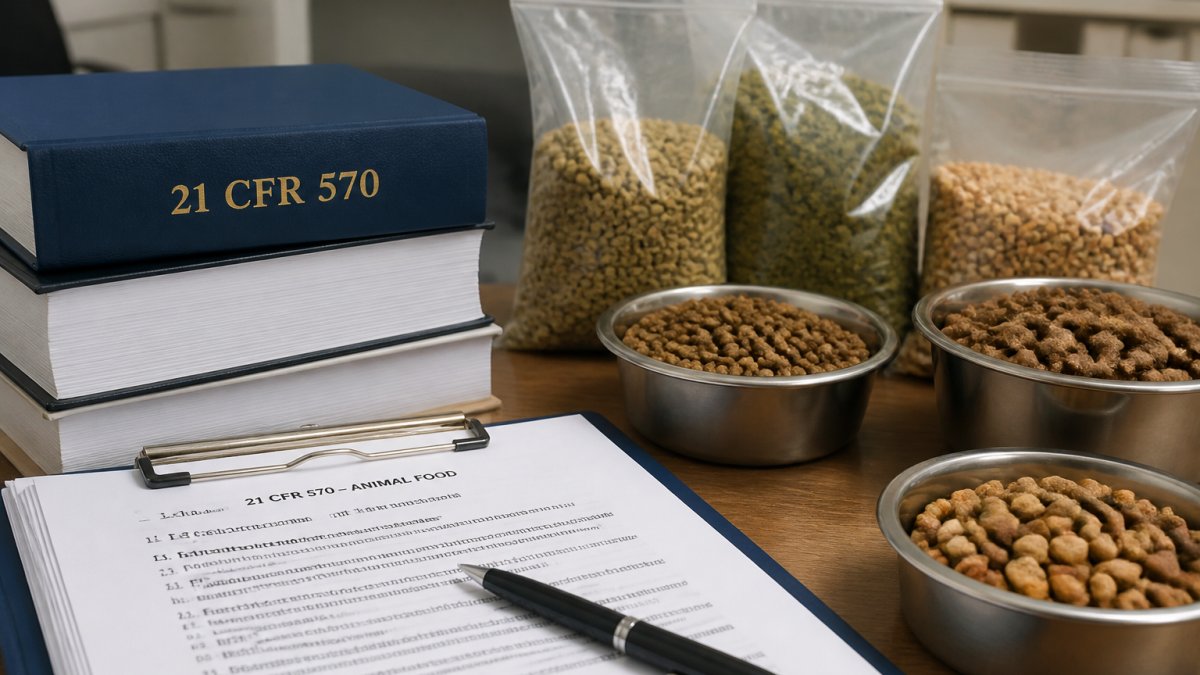
Animal food regulation differs significantly from human food. The primary statutes and regulations sit under the Federal Food, Drug, and Cosmetic Act with specific provisions in 21 CFR Parts 570 (animal food additives) and 507 (FSMA preventive controls for animal food). CVM—not CFSAN—holds primary oversight. AAFCO ingredient definitions and model regulations heavily influence State enforcement, even though AAFCO itself has no direct enforcement authority.
What to look for:
- Demonstrated experience with livestock feed, poultry feed, aquaculture, pet food, and specialty pet products.
- Familiarity with species- and life-stage-specific considerations.
- Knowledge of current ingredient pathways: Food Additive Petitions (FAP), GRAS notifications, Animal Food Ingredient Consultation (AFIC), AAFCO ingredient definition/SRIS processes, and awareness of emerging pathways such as Zootechnical Animal Food (ZAF).
- Understanding of labeling requirements, including guaranteed analysis, ingredient listing order, nutritional adequacy statements, and claim substantiation.
- Experience with state feed licensing, product registration, and tonnage reporting across multiple jurisdictions.
Key questions to ask:
- What is your direct experience with FDA-CVM Division of Animal Food Ingredients or related review processes?
- Which specific pre-market pathways have you managed for animal feed or pet food ingredients?
- Can you explain differences between FAP, GRAS notification, AFIC, and AAFCO processes and when each is appropriate?
- Do you have hands-on experience with state registrations and feed control officials?
Generalist regulatory consultants or those primarily experienced in human food, pharmaceuticals, or medical devices often lack the nuanced understanding needed here. Prioritize firms whose core focus is livestock feed and pet food.
2. Technical Depth: Animal Science, Nutrition, Toxicology, and Former Agency Experience
Regulatory strategy in this field is inseparable from science. Safety assessments, study design, protocol review, and dossier preparation require expertise in animal nutrition, toxicology, and related disciplines. Consultants who can interpret or design feeding studies, evaluate contaminant risks, and build defensible safety packages add substantial value.
What to look for:
- Team members with backgrounds as animal scientists, nutritionists, or toxicologists.
- Experience reviewing or designing safety and utility studies relevant to target species.
- Former FDA-CVM scientists who understand agency expectations, data gaps reviewers typically flag, and realistic timelines.
- Ability to bridge supplier safety data, published literature, and your specific intended use/conditions of use.
Key questions to ask:
- What scientific credentials does your team hold?
- Have team members worked inside FDA-CVM or comparable regulatory bodies?
- How do you approach study design planning and protocol review for novel ingredients?
- Can you provide examples (without confidential details) of building a safety case for an ingredient with limited existing data?
A consultant who merely “knows the forms” but cannot critically evaluate the underlying science will struggle with complex or novel ingredients.
Schedule a Free 30-minute Consultation →
3. Proven Track Record with Pre-Market Submissions and Compliance Challenges
Past performance is the strongest predictor of future results. Look for evidence of successful navigation of real submissions and compliance issues rather than generic claims of “experience.”
What to look for:
- Documented involvement in Food Additive Petitions, GRAS notifications, AFIC consultations, AAFCO ingredient definition requests, labeling reviews, and claims substantiation.
- Experience helping clients achieve product acceptance or approval efficiently.
- Familiarity with both straightforward (approved/GRAS ingredients) and complex (novel or high-risk) projects.
- Understanding of FSMA requirements, facility registration, and preventive controls for animal food.
- Ability to support post-market issues such as inspections, responses to agency questions, or label modernization.
Key questions to ask:
- Approximately how many animal food pre-market submissions or consultations have you supported?
- What types of outcomes have clients achieved (e.g., successful GRAS notifications, AAFCO definitions, state registrations)?
- How do you handle agency feedback or requests for additional information?
- Do you offer pre-filing consultations to map strategy before major resource commitment?
Request anonymized case examples or references from similar manufacturers or ingredient producers when possible. Our guide to navigating FDA animal food regulations covers the regulatory framework.
4. Strategic Approach and Clear Communication
The best consultants act as partners who help you choose the optimal pathway rather than defaulting to the most expensive or familiar option. They should assess risk, timeline, cost, and commercial goals together.
What to look for:
- Ability to develop a tailored regulatory strategy based on your ingredient, target species, claims, and market plans.
- Transparent discussion of risks, realistic timelines, and potential data gaps early.
- Clear, jargon-managed communication suitable for both technical and business stakeholders.
- Proactive updates and documented project management.
- Willingness to say “no” or recommend alternative approaches when a pathway is unlikely to succeed efficiently.
Key questions to ask:
- How do you determine the most appropriate regulatory pathway for a given ingredient or product?
- What does your typical engagement process look like from initial consultation through submission and follow-up?
- How do you keep clients informed of progress and emerging regulatory changes?
- Can you provide a sample project plan or timeline outline?
Avoid consultants who push a one-size-fits-all solution or cannot articulate trade-offs clearly.
Schedule a Free 30-minute Consultation →
5. Breadth of Services Matching Your Needs
Many manufacturers need more than a single submission. Evaluate whether the consultant can support the full lifecycle relevant to your business.
Relevant services often include:
- Pre-filing consultation and regulatory strategy
- Pre-market submissions (FAP, GRAS, AFIC, AAFCO-related)
- Study design planning, protocol review, and (where appropriate) coordination of contract research
- Labeling review and claims substantiation
- Support for state licensing, registration, and ongoing compliance
- Guidance on FSMA preventive controls and related quality systems
A firm that offers integrated scientific and regulatory support reduces coordination friction and knowledge loss between vendors.
See how to prepare a GRAS notification and the beginner's guide to AAFCO labeling requirements.
6. Independence, Objectivity, and Ethical Standards
Choose consultants free from conflicts that could bias recommendations (e.g., heavy reliance on particular contract labs or suppliers). Confirm they maintain client confidentiality, especially important when handling proprietary formulations or novel technology. Professionalism, responsiveness, and alignment with industry ethical norms matter for long-term relationships.
7. Practical Considerations: Capacity, Fit, and Commercial Terms
Even the most qualified consultant fails if they lack bandwidth or cultural fit.
Evaluate:
- Current capacity and ability to meet your timelines.
- Experience working with companies of your size and stage (startup ingredient innovator vs. established multi-state manufacturer).
- Clarity of fee structures (project-based, retainer, or hybrid) and what is included versus additional.
- Geographic or virtual collaboration preferences and time-zone practicality.
- References or testimonials from animal feed or pet food clients.
Discuss scope carefully up front to avoid scope creep or unexpected costs. A well-structured engagement agreement protects both parties.
When to Engage a Regulatory Consultant
Engage early—ideally before finalizing novel ingredient development, major formulation changes, new claims, or expansion into additional states or species. Early strategy work prevents expensive late-stage redesigns or submission rejections.
Common triggers include:
- Introducing a new or significantly modified ingredient
- Launching a new product line or expanding claims
- Preparing for multi-state distribution
- Responding to agency inquiries or inspection observations
- Navigating changes in pathways (e.g., shifts involving AAFCO processes or new FDA consultation options)
Schedule a Free 30-minute Consultation →
Red Flags to Avoid
- Claims of guaranteed approval or unrealistic timelines
- Lack of specific animal food/CVM experience
- Inability to discuss current pathways knowledgeably
- Over-reliance on outdated processes
- Poor communication or delayed responses during the evaluation phase
- Pressure to commit without a clear scope or strategy discussion
How Seven Hills Regulatory Services, LLC Aligns with These Criteria
Seven Hills Regulatory Services, LLC focuses exclusively on regulatory consultancy for the livestock feed and pet food industries. The team includes experienced animal scientists, nutritionists, toxicologists, and former FDA scientists. Services cover pre-filing consultation, pre-market submissions (including Food Additive Petitions, GRAS Notifications, Animal Food Ingredient Consultation, AAFCO-related processes, and related pathways), study design planning and protocol review, regulatory strategy, labeling, claims, and case-by-case contract research support.
This combination of deep technical expertise and specialized regulatory knowledge positions the firm to help manufacturers and ingredient producers navigate complex pre-market reviews and compliance challenges efficiently, with the goal of successful product acceptance and approval.
For the broader picture on when outside help pays for itself, our guide to expert pet food regulatory help.
Conclusion and Next Steps
Selecting a regulatory consultant is a strategic decision that affects product timelines, costs, and risk profile. Prioritize specialized animal food expertise, scientific depth, proven submission experience, strategic thinking, and clear communication. Use the questions in this guide during evaluations. Request a pre-filing or strategy consultation to test fit and receive an initial pathway assessment.
For animal feed and pet food manufacturers and ingredient producers facing novel ingredients, labeling questions, multi-state requirements, or evolving FDA/AAFCO frameworks, the right partner accelerates progress while reducing compliance risk. Thorough due diligence at the selection stage pays dividends throughout the product lifecycle.
If you are evaluating regulatory support for your next ingredient or product, consider reaching out for a focused discussion of your specific situation and pathway options. Early, informed engagement remains one of the highest-leverage steps available in bringing safe, compliant animal food products to market.
Once you have your questions ready, you can schedule a call and put them to us directly.
Frequently Asked Questions
What does an animal food regulatory consultant do?
An animal food regulatory consultant guides companies through pre-market reviews, ingredient authorization, labeling and claims review, and the abbreviation cGMP compliance for livestock feed and pet food. That includes preparing submissions, drafting labels that meet 21 CFR 501 and AAFCO labeling guidelines, and advising on regulatory strategy before product development locks in. Many firms also offer protocol review, pre-filing consultation, and study design planning so problems surface before an FDA review does.
When should a pet food startup hire a regulatory consultant?
Hire before formulation is finalized, not after. Ingredient authorization questions, intended use, and label claims all shape what you can legally sell, and changing course later costs more than early advice. Startups developing a novel ingredient, planning claims, or preparing a first pre-market submission benefit most. If your launch is months away and you have no in-house regulatory lead, bring in help at the concept stage so the pathway is clear before you commit to studies.
What should I ask before hiring an animal food regulatory consultant?
Ask how recently they worked with FDA, which submissions they have prepared. Ask for references from companies your size and a written scope of work that states what happens if FDA requests additional studies. Confirm they understand labeling requirements. Also ask who actually does the work versus who sells it.
How do I assess a consultant's experience with animal food labeling and claims?
Ask them to walk through a real label they reviewed and explain the changes they made. A strong consultant can distinguish structure-function claims, which are regulated as drugs, from permitted label statements, and can cite both 21 CFR 501 and AAFCO labeling guidelines. They should also know the Pet Food Label Modernization work at AAFCO and what it means.